
Andrew Tate Fight: The Explosive Rise, Controversies, and Combat Legacy Explained

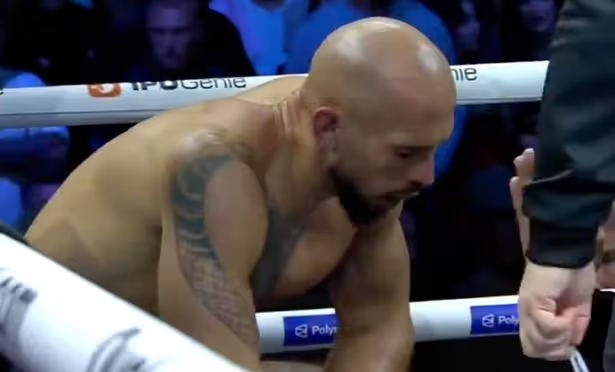
The keyword Andrew Tate fight has rapidly surged in global search trends, reflecting widespread curiosity about the fighting background, skills, and controversies of Andrew Tate. Known for his bold personality and polarizing statements, Tate’s combat sports history remains one of the most compelling aspects of his identity.
We explore his fighting career with clarity and depth, breaking down his achievements, fighting style, strengths, and criticisms. This article delivers a comprehensive and SEO-optimized analysis designed to dominate search rankings while offering real value to readers.
Quick Bio of Andrew Tate
Full Name: Emory Andrew Tate III
Profession: Kickboxer, Entrepreneur, Social Media Personality
Nationality: British-American
Fighting Style: Kickboxing
Titles: Multiple-time world kickboxing champion
Andrew Tate built his reputation not just online, but through years of intense training and competition in professional kickboxing circuits. His transition from fighter to influencer has amplified interest in his combat history.
Andrew Tate Fight Career Overview
Andrew Tate’s fighting journey is rooted in discipline, aggression, and tactical striking. He competed professionally in kickboxing, earning multiple championships across organizations.
His career highlights include winning ISKA world titles, where his precision striking and counterattacking ability set him apart. Unlike many fighters who rely purely on power, Tate combined speed, timing, and mental resilience to dominate opponents.
Despite his achievements, critics often question the level of competition he faced. This creates a balanced narrative—on one hand, undeniable titles and experience; on the other, debates about the credibility of certain leagues.
Fighting Style and Strengths
Andrew Tate’s fighting style reflects a mix of technical kickboxing and strategic aggression. He is known for maintaining distance, using long-range strikes, and controlling the pace of fights.
One of his strongest attributes is his counter-striking ability. Instead of rushing forward recklessly, Tate often waits for opponents to make mistakes, then punishes them with precise combinations. This approach minimizes risk while maximizing efficiency.
Additionally, his mental toughness plays a crucial role. Tate has frequently emphasized psychological dominance, believing that winning begins in the mind before physical combat even starts.
Notable Andrew Tate Fights
Several fights define Andrew Tate’s legacy in kickboxing. These bouts showcase his adaptability and ability to perform under pressure.
In championship matches, Tate demonstrated exceptional endurance and tactical awareness, often outlasting opponents in later rounds. His ability to remain composed under stress gave him a significant advantage in high-stakes situations.
However, not all fights were victories. Losses and tough matches reveal the human side of his career, highlighting vulnerabilities and areas where opponents exploited weaknesses. This duality adds depth to his story.
Positive Aspects of Andrew Tate’s Fighting Career
Andrew Tate’s fighting career offers multiple positive takeaways that contribute to his popularity.
First, his discipline and work ethic stand out. Years of training and competition shaped his mindset, which he later translated into business and online branding. This consistency inspires followers who admire resilience and determination.
Second, his success in kickboxing proves his legitimacy as a trained fighter. Regardless of online controversies, his titles and experience cannot be dismissed. They form the foundation of his authority when discussing combat and self-defense.
Negative Criticism and Controversies
Despite his achievements, Andrew Tate’s fighting career is not without criticism. Some argue that his competition level was not elite compared to top-tier global fighters.
Others believe his online persona overshadows his athletic accomplishments, turning his fighting history into a secondary aspect of his identity. This creates a conflict between perception and reality, where public opinion may not fully align with his actual achievements.
Additionally, critics question whether his aggressive communication style reflects true sportsmanship. These criticisms contribute to ongoing debates about his legacy.
Andrew Tate Fight Training Philosophy
Andrew Tate’s training philosophy centers around mental strength, consistency, and calculated aggression. He often emphasizes that success in fighting—and life—requires unwavering focus.
His approach includes high-intensity training routines, sparring sessions, and strategic planning. Rather than relying solely on physical strength, Tate advocates for intellectual combat, where fighters analyze opponents and exploit weaknesses.
This philosophy has influenced many followers who view him as more than just a fighter, but as a mindset coach.
Impact on Modern Combat Culture
Andrew Tate’s influence extends beyond the ring. His fighting background has shaped his brand, making him a prominent figure in discussions about masculinity, discipline, and self-defense.
His presence on social media has introduced a new audience to kickboxing, increasing interest in the sport. At the same time, his controversial opinions create polarization, drawing both admiration and criticism.
This dual impact ensures that the keyword Andrew Tate fight remains highly relevant in search engines, as audiences continue to explore his past and present.
Conclusion
The story of Andrew Tate’s fighting career is both powerful and complex. His achievements in kickboxing demonstrate skill, discipline, and determination, while criticisms highlight the challenges of maintaining credibility in a highly scrutinized public space.
We see a fighter who built his foundation through years of competition, then transitioned into a global personality. Whether admired or criticized, his fighting legacy remains a central pillar of his identity, driving ongoing interest and debate.
FAQ About Andrew Tate Fight
1. Was Andrew Tate a professional fighter?
Yes, Andrew Tate was a professional kickboxer who competed internationally and won multiple world titles.
His career includes participation in recognized organizations, where he demonstrated strong technical skills and strategic fighting ability.
2. What fighting style does Andrew Tate use?
Andrew Tate primarily uses a kickboxing style, focusing on striking techniques such as punches, kicks, and defensive movement.
His approach emphasizes distance control and counterattacks, making him a calculated and efficient fighter.
3. How many titles has Andrew Tate won?
Andrew Tate has won multiple world championships in kickboxing, particularly under ISKA promotions.
These titles contribute significantly to his reputation as a legitimate combat sports athlete.
4. Why is Andrew Tate’s fighting career controversial?
Controversy arises from debates about the level of competition he faced and his outspoken personality.
Some critics believe his online persona overshadows his actual achievements in the ring.
5. Is Andrew Tate still fighting?
Andrew Tate is no longer actively competing in professional kickboxing.
However, his past fights and training philosophy continue to influence his brand and public image.