

Ethereum’s Rise in the Crypto Market
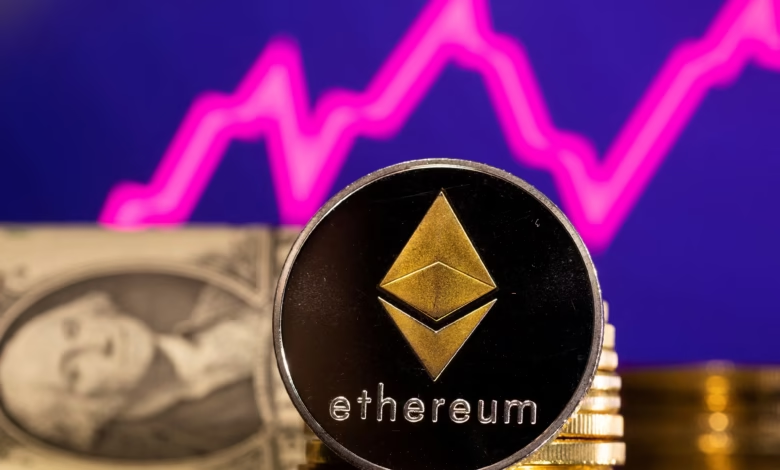
Ethereum has once again found itself at the center of the crypto conversation. As the broader digital asset market moves into a phase of renewed confidence, Ethereum (ETH) stands tall near the $4,470 mark. This impressive rally isn’t just about speculative hype — it’s backed by strong fundamentals, powerful upgrades, and a growing wave of institutional adoption.
Unlike many short-lived crypto trends, Ethereum continues to be a cornerstone of blockchain innovation. From decentralized finance (DeFi) to NFTs and Layer-2 scaling solutions, nearly every aspect of the crypto ecosystem has roots in Ethereum’s technology. Its resilience in both bull and bear markets has proven one thing: Ethereum isn’t just a cryptocurrency — it’s an entire digital economy.
Investors and developers alike are increasingly turning their eyes toward Ethereum’s long-term potential, particularly as it continues to evolve with groundbreaking protocol upgrades like the upcoming Fusaka Upgrade. This new chapter could solidify Ethereum’s dominance as the most efficient and developer-friendly Layer-1 network in existence.
Ethereum’s Current Market Position: Nearing $4,470 and Gaining Confidence
At around $4,470, Ethereum’s current price reflects more than just bullish sentiment. It signifies market recognition of its strong fundamentals and continued innovation. The crypto market, known for its volatility, has entered a more confident stage, and Ethereum is leading this shift.
One key reason for this price stability is Ethereum’s robust ecosystem. The number of active addresses, daily transactions, and total value locked (TVL) in DeFi protocols built on Ethereum has grown consistently. These metrics showcase not only user engagement but also the increasing utility of the network.
Additionally, Ethereum’s Layer-2 ecosystem — with platforms like Arbitrum, Optimism, and zkSync — continues to reduce congestion and fees, enhancing user experience and driving broader adoption. The network’s move to Proof-of-Stake through “The Merge” has also improved its energy efficiency by over 99%, aligning with institutional and environmental expectations.
This growing confidence among both retail and institutional investors is setting the stage for Ethereum to potentially break the $5,000 mark in the near future.
The Broader Crypto Market’s Renewed Optimism
After years of volatility, the crypto market appears to be entering a new phase of maturity. Bitcoin has regained dominance as the leading digital asset, but Ethereum’s rise represents something deeper — a shift from mere speculation toward real-world application.
Institutional capital is flowing back into digital assets, but this time, the focus is on blockchain utility rather than just token prices. Ethereum’s role in powering decentralized applications (dApps), smart contracts, and decentralized exchanges (DEXs) makes it indispensable to the industry.
Moreover, macroeconomic factors like decreasing inflation and increased global digital adoption are boosting investor confidence. Ethereum, with its unmatched infrastructure, stands as the biggest beneficiary of this renewed optimism.
Why Ethereum Remains the Leading Smart Contract Platform
Ethereum didn’t just invent the concept of smart contracts — it perfected them. Its programmable blockchain allows developers to build applications that run exactly as programmed without downtime or third-party interference. This innovation has birthed an entire ecosystem of decentralized tools, from DeFi lending platforms to NFT marketplaces.
What gives Ethereum its edge is its widespread adoption and developer community. No other blockchain has seen as many active developers contributing to open-source projects. This vast ecosystem ensures continuous improvement, innovation, and reliability.
Furthermore, Ethereum’s compatibility with various Layer-2 solutions means it’s not just growing — it’s evolving. The Fusaka Upgrade promises to make smart contract execution faster and more cost-effective, reinforcing Ethereum’s position as the undisputed leader in blockchain development.
Understanding Ethereum’s Network Fundamentals
The health of Ethereum’s network can be measured through multiple metrics — transaction throughput, network activity, and developer participation. All of these indicators are pointing upward.
Ethereum processes millions of transactions daily, and the transition to Proof-of-Stake has made the network not only greener but also more secure. Staking ETH provides users with passive income while simultaneously securing the network, creating a sustainable and profitable ecosystem.
In terms of total value locked (TVL), Ethereum dominates the DeFi sector, commanding over 60% of the entire market’s liquidity. This shows how much trust developers and users place in its infrastructure.
With every major upgrade, including the upcoming Fusaka Update, Ethereum’s network fundamentals strengthen — reducing gas fees, improving scalability, and enhancing the overall user experience.
Institutional Interest: The Growing Wall Street Involvement in Ethereum
Ethereum’s rise isn’t just being powered by retail traders — institutions are playing a massive role. Over the past few years, traditional financial powerhouses have increasingly entered the Ethereum ecosystem. Investment firms, hedge funds, and even publicly traded companies are beginning to view ETH not merely as a digital currency but as an essential infrastructure asset in the new digital economy.
One major catalyst for this shift has been Ethereum’s transition to Proof-of-Stake. The upgrade drastically reduced energy consumption, addressing one of the key concerns institutional investors had about cryptocurrencies. Environmental, social, and governance (ESG) standards are critical for institutional portfolios, and Ethereum now fits neatly into those frameworks.
Furthermore, Ethereum-based financial products — such as futures, ETFs, and staking derivatives — are gaining regulatory approval in several countries. This financialization of Ethereum is opening the door for large-scale capital inflows that were once reserved for traditional assets.
Another important factor driving institutional interest is Ethereum’s versatility. From tokenized real estate to on-chain bonds, Ethereum’s smart contracts enable a new era of programmable finance. This institutional-grade infrastructure is making Ethereum a bridge between traditional finance and decentralized finance (DeFi), solidifying its position as the backbone of blockchain innovation.
Ethereum vs. Other Layer-1 Blockchains: What Sets It Apart
While many new Layer-1 blockchains have emerged — including Solana, Avalanche, and Cardano — Ethereum continues to dominate. The reason lies in its first-mover advantage, security, and network effects. Ethereum wasn’t just the first smart contract platform; it has also cultivated the largest developer ecosystem, making it extremely difficult for competitors to catch up.
Ethereum’s decentralization is another critical differentiator. Unlike some newer blockchains that sacrifice decentralization for speed, Ethereum maintains a delicate balance between scalability, security, and decentralization — the famous “blockchain trilemma.” This makes Ethereum far more trustworthy for large-scale applications handling billions of dollars in value.
Additionally, Ethereum’s interoperability and Layer-2 integrations make it adaptable. As new technologies emerge, Ethereum doesn’t become obsolete; it evolves. The upcoming Fusaka Upgrade is another example of this adaptability, as it will enhance transaction efficiency while reducing fees — something many competing networks struggle with.
Ultimately, Ethereum’s ability to innovate while maintaining its foundational strengths ensures its dominance among Layer-1 blockchains.
The Upcoming Fusaka Upgrade: A Game-Changer for Scalability
The Fusaka Upgrade is one of the most anticipated developments in Ethereum’s roadmap. Designed to dramatically increase scalability, this update aims to improve transaction throughput and reduce network congestion, a long-standing challenge for the Ethereum ecosystem.
Scalability has been Ethereum’s Achilles’ heel, particularly during periods of high demand when gas fees skyrocket. Fusaka addresses this issue head-on by optimizing how data is processed and stored across the network. It will introduce improved sharding mechanisms and new compression algorithms that enhance data efficiency, allowing for thousands of transactions per second without compromising security.
Beyond performance, Fusaka also enhances the developer experience. It simplifies smart contract deployment, reduces resource consumption, and introduces new tools that make development faster and more intuitive. This means that developers will spend less time troubleshooting network issues and more time building innovative applications.
For users, Fusaka represents a turning point. Lower fees and faster transactions will make Ethereum more accessible to the masses, further fueling adoption across DeFi, NFTs, gaming, and enterprise use cases. As the Fusaka Upgrade rolls out, Ethereum could truly become the scalable backbone of Web3.
How the Fusaka Upgrade Improves Developer Experience
While scalability and efficiency often grab headlines, one of the most transformative aspects of the Fusaka Upgrade is its focus on developers. Ethereum’s developer ecosystem is its greatest strength, and this upgrade makes their workflow smoother, faster, and more cost-effective.
Fusaka introduces new development frameworks and toolkits that simplify the coding process for smart contracts. It also enhances compatibility with popular programming languages, lowering the entry barrier for new developers who want to build on Ethereum. These upgrades make it easier to test, deploy, and update decentralized applications (dApps) with minimal friction.
Moreover, the update will improve network documentation and development APIs, providing clearer insights into performance metrics and contract interactions. Developers will now be able to access more real-time data, allowing them to optimize their applications more effectively.
In essence, Fusaka is not just about making Ethereum faster — it’s about making it more developer-friendly. By focusing on usability and efficiency, Ethereum is ensuring that innovation on its platform will continue to thrive for years to come.
Ethereum’s Role in Decentralized Finance (DeFi)
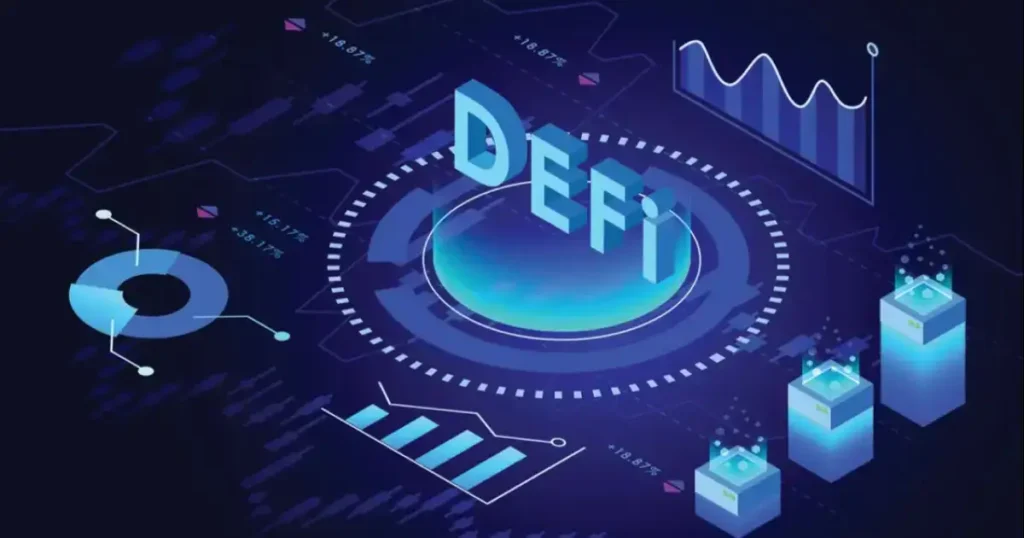
If Bitcoin is digital gold, Ethereum is the foundation of decentralized finance. DeFi has revolutionized how we think about traditional financial services — from lending and borrowing to yield farming and staking — and nearly all of it runs on Ethereum.
Platforms like Aave, Uniswap, and MakerDAO are built on Ethereum’s smart contract infrastructure, allowing users to interact without intermediaries. This has unlocked unprecedented financial freedom, especially in regions where access to banking services is limited.
Ethereum’s DeFi ecosystem continues to expand, with billions of dollars in total value locked across hundreds of protocols. The transparency and efficiency of blockchain technology have made DeFi not just a trend, but a viable alternative to traditional banking.
As the Fusaka Upgrade enhances scalability and reduces fees, DeFi on Ethereum is expected to grow exponentially. More affordable transactions mean more accessibility, which in turn drives liquidity and innovation within the space. Ethereum’s dominance in DeFi remains unchallenged — and it’s only getting stronger.
The Expansion of NFTs and Ethereum’s Dominance
Non-Fungible Tokens (NFTs) have transformed digital ownership, and Ethereum remains at the heart of this revolution. From digital art to music rights, collectibles, and virtual real estate, NFTs represent a new form of value exchange — and Ethereum is the primary network powering it all.
The ERC-721 and ERC-1155 standards, created by Ethereum developers, are the backbone of NFT technology. These standards define how digital assets can be created, transferred, and verified on the blockchain. This has made Ethereum the go-to platform for artists, brands, and creators who want to tokenize and monetize their work in a decentralized way.
The NFT boom of 2021 brought global attention to Ethereum, but unlike many fads, NFTs have evolved beyond speculation. Major corporations and entertainment studios are now using Ethereum-based NFTs to engage customers, authenticate goods, and even represent real-world assets like property deeds and event tickets.
As gas fees drop and transaction speeds improve through the Fusaka Upgrade, NFTs will become even more accessible. This will likely attract mainstream users and corporate players, pushing Ethereum to the forefront of digital ownership and creative economies once again.
Ethereum’s Transition to Sustainability: Proof-of-Stake Success
One of Ethereum’s most significant transformations was its shift from Proof-of-Work (PoW) to Proof-of-Stake (PoS) during the event known as The Merge. This wasn’t just a technical change — it was a milestone for the entire crypto industry.
The move to PoS slashed Ethereum’s energy consumption by over 99%, making it one of the most environmentally friendly blockchains in existence. This shift also introduced staking, where users can lock up ETH to help secure the network and earn rewards. It’s a win-win: greater sustainability and a more inclusive participation model.
This transition also opened the door to increased institutional adoption. ESG-conscious investors now view Ethereum as a sustainable, long-term asset rather than a carbon-heavy technology. The network’s energy efficiency and strong governance model position it perfectly for global expansion in the era of green finance.
With the Fusaka Upgrade complementing these efforts by improving performance and scalability, Ethereum continues to lead the way toward a sustainable, high-performing blockchain future.
Future Price Outlook: Can Ethereum Reach $5,000 and Beyond?
Ethereum’s strong fundamentals, network upgrades, and growing institutional participation have many analysts predicting that ETH could soon break the $5,000 barrier. While price predictions in the crypto market are always uncertain, Ethereum’s technical and economic momentum makes such a milestone entirely plausible.
The combination of the Fusaka Upgrade, increasing on-chain activity, and the continued expansion of DeFi and NFTs could create a perfect storm for growth. Moreover, Ethereum’s scarcity model — driven by ETH burns through EIP-1559 — makes it a deflationary asset over time. This means supply will gradually decrease while demand continues to rise, naturally supporting higher prices.
Institutional interest also adds long-term price stability. As more funds, ETFs, and corporate treasuries allocate a portion of their portfolios to ETH, the asset becomes less prone to speculative swings.
If Ethereum successfully executes its scalability vision and maintains its developer-first philosophy, reaching $5,000 — and eventually even $10,000 — isn’t a matter of “if,” but “when.”
Risks and Challenges Ethereum Still Faces
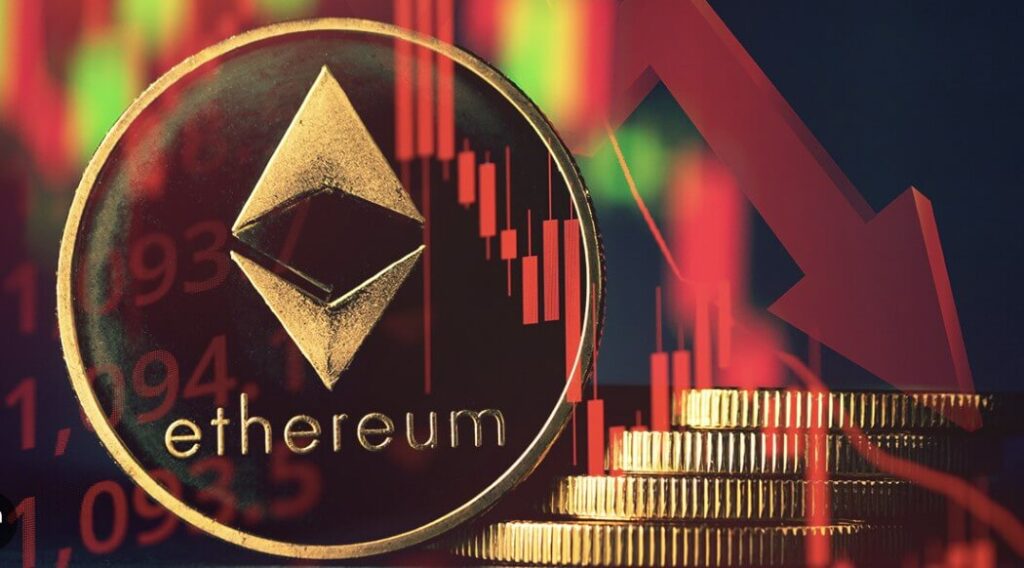
Despite its dominance, Ethereum isn’t without challenges. Scalability, though improving, remains an ongoing battle. Competing Layer-1s and Layer-2s are continuously innovating, offering faster and sometimes cheaper alternatives. Ethereum must maintain its pace of upgrades to stay ahead.
Regulatory uncertainty is another concern. Governments worldwide are still figuring out how to classify and regulate cryptocurrencies. As Ethereum underpins decentralized finance, it could become a focal point for future regulations targeting DeFi or staking.
Network congestion and gas fees, while mitigated through Layer-2s and Fusaka, can still pose barriers for casual users. Additionally, maintaining decentralization while pursuing scalability is a delicate balance that requires careful governance.
However, Ethereum’s massive developer base, active community, and transparent roadmap give it a strong advantage in addressing these issues. Its proven resilience through multiple market cycles suggests that it will continue to adapt and thrive no matter what challenges arise.
Conclusion: Ethereum’s Bright Path Toward the Future of Web3
Ethereum isn’t just surviving in the evolving crypto landscape — it’s thriving. Its near-$4,470 price point, robust ecosystem, and upcoming Fusaka Upgrade highlight why Ethereum remains the most important blockchain in the world.
From powering decentralized finance to enabling NFTs and decentralized applications, Ethereum continues to shape the foundation of Web3. The network’s commitment to innovation, sustainability, and scalability ensures that it will remain at the center of the digital revolution for years to come.
As the Fusaka Upgrade rolls out and institutional adoption accelerates, Ethereum’s influence will only expand further. Whether you’re a developer, investor, or simply a tech enthusiast, one thing is certain — Ethereum is paving the way toward a more open, decentralized, and connected digital future.
FAQs
1. What makes Ethereum different from Bitcoin?
Bitcoin is primarily a digital currency used for value transfer, while Ethereum is a programmable blockchain that enables smart contracts and decentralized applications (dApps).
2. What is the Fusaka Upgrade?
The Fusaka Upgrade is an upcoming Ethereum protocol improvement designed to enhance scalability, lower transaction fees, and improve the developer experience.
3. How does Ethereum’s Proof-of-Stake system work?
Ethereum’s Proof-of-Stake system allows users to stake ETH to help validate transactions, secure the network, and earn staking rewards instead of relying on energy-intensive mining.
4. Will Ethereum’s price reach $5,000?
While no one can predict prices with certainty, Ethereum’s strong fundamentals, increasing institutional adoption, and ongoing upgrades make $5,000 a realistic target in the medium term.
5. Is Ethereum a good investment for the long term?
Many analysts believe Ethereum’s role in DeFi, NFTs, and Web3 development makes it one of the most promising long-term assets in the crypto market.